21 Nov 2026
Variations in Thoroughbred Speed Metrics Due to Seasonal Changes and Their Influence on Forecast Reliability
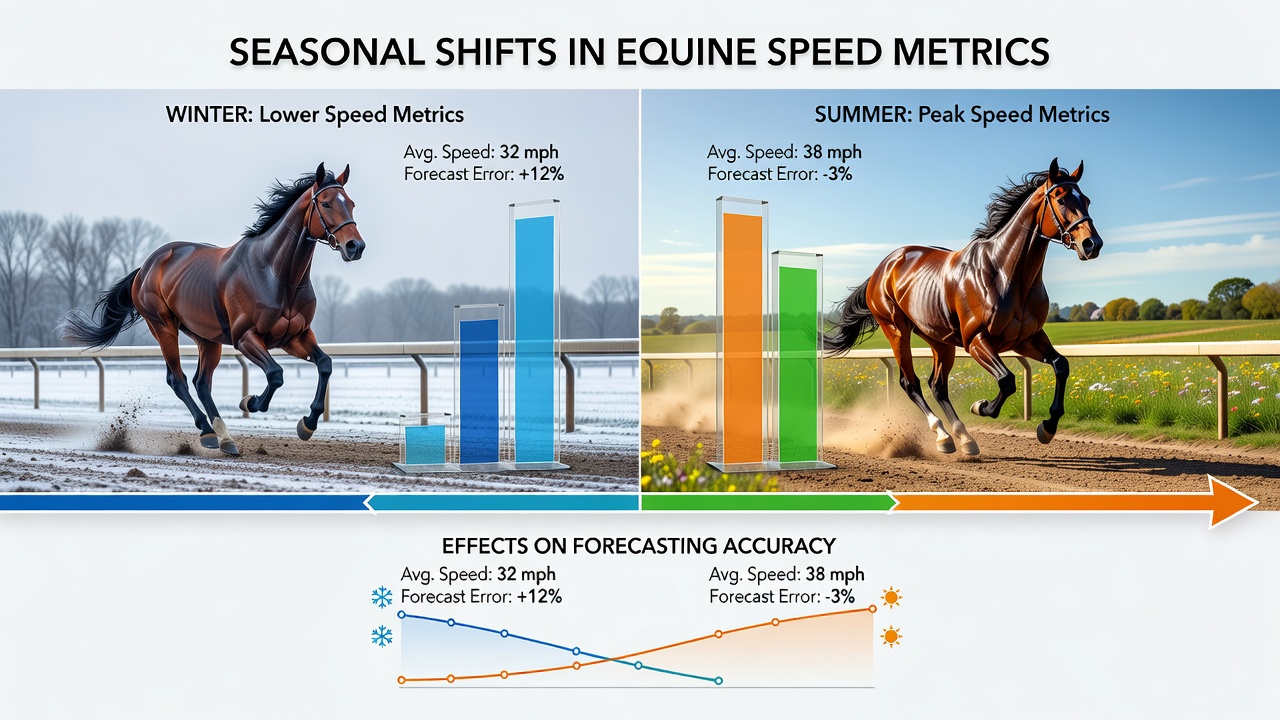
Seasonal shifts alter track surfaces, air temperatures, and daylight hours in ways that directly modify equine speed measurements recorded during races, and these modifications in turn reduce the precision of models used to project future outcomes. Data collected from multiple racing jurisdictions show that average sectional times shift by measurable margins between winter and summer meetings, with the largest deviations appearing in sprint distances where ground firmness plays a larger role.
Track Surface Responses to Weather Cycles
Winter rains compact soil layers and increase moisture retention, while summer heat dries the same surfaces and raises the risk of cracking or loose material on the top layer. Researchers tracking these conditions across North American and European circuits have recorded how such changes affect stride length and acceleration phases, producing speed figures that diverge from baseline averages established during transitional months. Observers note that these surface responses create consistent patterns visible in historical race data, where horses competing on softer ground post slower final times even when their raw ability remains unchanged.
November 2026 brought unseasonably mild temperatures to several major racing regions, prompting analysts to adjust speed ratings upward for meetings held on firmer ground than typical for that calendar point. Figures compiled by industry bodies reveal that such anomalies require forecasters to recalibrate their inputs rather than rely on static seasonal templates.
Quantifying Shifts in Velocity Measurements
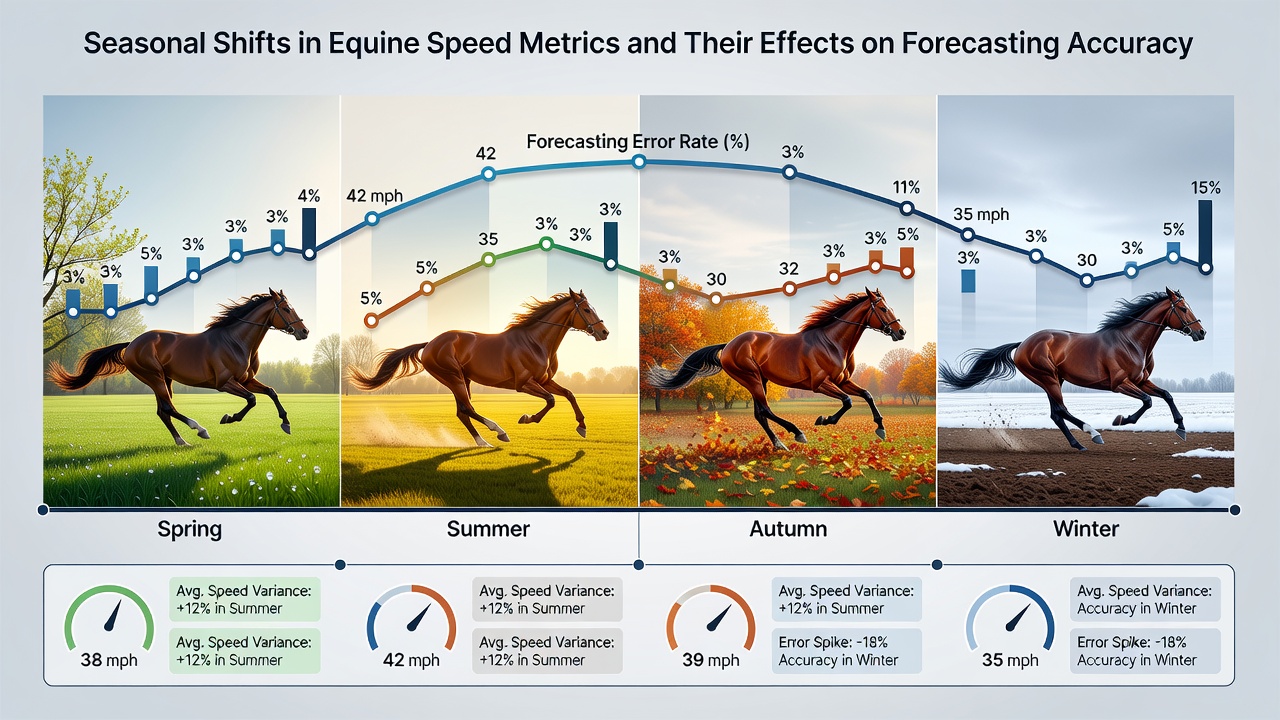
Studies examining thousands of race records indicate that top-end speeds drop between 1.5 and 3.2 percent during colder months on turf tracks, while dirt surfaces show smaller but still detectable reductions tied to increased kickback and footing instability. These percentages emerge from comparisons of matched horse populations racing at the same venues across different seasons, allowing direct isolation of environmental variables. Analysts apply these adjustments to raw timing data before feeding the numbers into projection algorithms, because unadjusted figures produce systematic over- or under-estimates depending on the time of year.
Effects on Algorithm Accuracy
Forecasting systems that incorporate seasonal correction factors maintain higher hit rates when predicting placed horses and exact order of finish. Systems lacking these corrections show measurable drops in reliability during the shift from autumn to winter schedules, particularly on tracks that transition from good to heavy ground states. Data from Racing Australia and parallel records maintained by The Jockey Club demonstrate that models updated with monthly surface and temperature variables reduce error margins by up to 12 percent compared with static approaches. Those who maintain large historical databases routinely test their algorithms against hold-out sets drawn from specific seasonal windows to confirm the value of these adjustments.
Additional variables such as wind patterns and humidity levels compound the surface effects, yet they remain secondary to the primary ground condition changes. Researchers have isolated these secondary factors through controlled comparisons of races run on the same day but at venues with differing exposures, producing refined coefficients that further tighten projection outputs.
Regional Differences in Seasonal Impact
Tracks located in temperate zones experience more pronounced seasonal swings than those in consistently warm or cold climates. Canadian circuits, for instance, record larger speed metric fluctuations between summer and winter than Australian venues where year-round racing occurs on more stable surfaces. European data sets show intermediate variation, with coastal tracks displaying smaller deviations than inland courses due to moderating maritime influences. Forecasters who pool international data therefore apply location-specific weighting to avoid blending incompatible seasonal profiles.
Conclusion
Seasonal shifts in equine speed metrics arise from measurable interactions between weather, track surfaces, and equine physiology, and these shifts require corresponding updates to forecasting models if accuracy targets are to be maintained. Organizations responsible for compiling race data continue to refine their collection methods to capture finer-grained environmental variables, while projection systems evolve to integrate those variables in real time. The result is a progressively tighter relationship between recorded performance and predicted outcomes across the annual racing calendar.